
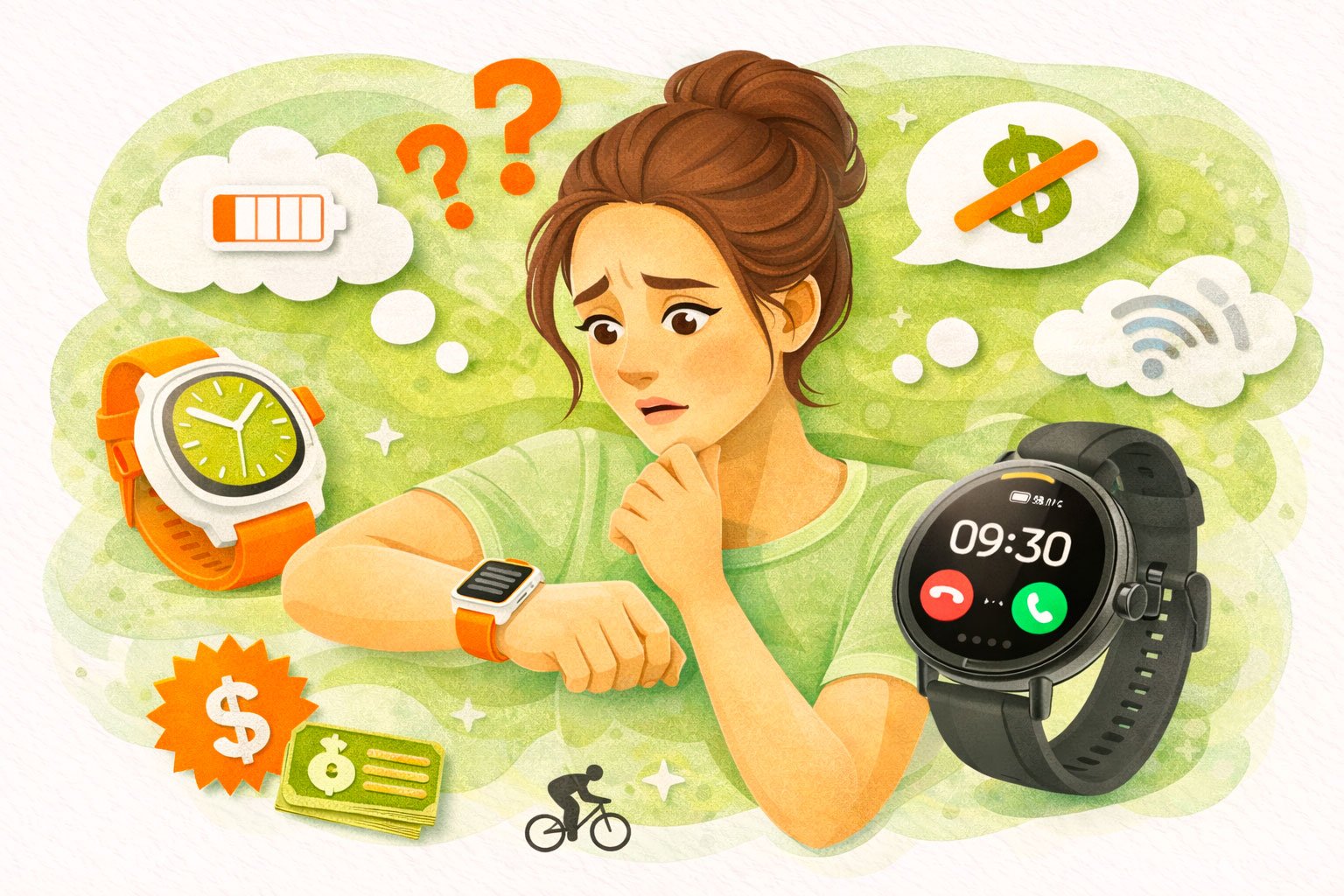
Budget smartwatches can be a great entry point into fitness and everyday tracking. But many people end up disappointed — not because the watch is bad, but because expectations and reality didn’t match. Here are the most common mistakes I see, and how to avoid them.
Tell me how you chose your watch?
Before we get into the list, let me tell you why I wrote this.
I’ve been a fitness trainer for years, and I still work with people every week. I watch my friends, my clients, and complete beginners make the same mistakes again and again — first when choosing fitness equipment, and now when buying a smartwatch or fitness band.
So I gathered all those patterns here in one place. These are real-life mistakes I’ve seen, not theory.
I’ll probably update this article over time, too. Smartwatches keep adding new features — who knows, maybe soon we’ll all have an AI coach living on our wrist (okay… half joking, half not).
And if you’ve gone through the decision yourself, I’d genuinely love to hear from you. Tell me how you chose your watch, what mattered to you, and what you wish you had known earlier.

1. Expecting It to Work Like a $400 Watch
A budget smartwatch can track steps, heart rate, sleep, and show notifications. That’s its strength.
It usually won’t have:
- ultra-precise GPS
- advanced training metrics
- medical-grade sensors
- super-smooth premium apps
If you expect top-tier sports analytics or smartwatch apps like on Apple or Samsung flagship models, you’ll feel let down. Budget watches are for awareness and habit-building — not elite performance tracking.
2. Ignoring App Compatibility
Many problems don’t come from the watch — they come from the app.
Before buying, check:
- Is the app available for your phone (Android/iOS)?
- Do reviews mention connection issues?
- Does the app language and interface feel usable?
A watch is only as good as the app that collects and displays your data.
3. Choosing Based Only on Looks
Yes, design matters. But don’t stop there.
People often choose a watch because:
- it has a metal case
- it looks like a premium brand
- the screen is big and bright
But then they realize:
- the strap is uncomfortable
- the watch is too heavy for sleep
- the screen is hard to read in sunlight
Comfort and daily wearability matter more than style in the long run.
4. Overestimating Battery Life Claims
“Up to 10 days” rarely means real life.
Battery life depends on:
- screen brightness
- how many notifications you get
- heart rate monitoring frequency
- whether you use calling or voice assistant features
If you like bright screens, lots of alerts, and daily workouts, expect to charge more often. That’s normal — not a defect.
5. Thinking Health Data Is Medical Data
Budget smartwatches are for trends, not diagnosis.
They’re great for:
- noticing if you’re moving more
- seeing general sleep patterns
- keeping an eye on heart rate changes
They are not medical devices. If you treat them like one, you may either panic for no reason or trust numbers too much.
6. Buying Too Advanced for Your Real Lifestyle
Some people buy a feature-packed model and then use it only for time and step count.
Be honest:
- Do you really need 120+ sports modes?
- Will you actually use Bluetooth calling from your wrist?
- Do you train seriously, or just want to stay active?
A simpler model you actually use is better than a powerful one you ignore.
7. Forgetting Why You’re Buying It
The biggest mistake: buying a watch instead of building a habit.
A smartwatch won’t make you fit. But it can:
- remind you to move
- help you see progress
- keep your routine visible
Choose a device that supports your daily life, not one that tries to impress you on paper.
A budget smartwatch works best when expectations are realistic. If you see it as a helpful tool — not a miracle device — you’re far more likely to be happy with your choice.